
2025 Rainy Season Guide: How to Stop Your Plywood from Molding & Warping?
[Introduction: The Nightmare of Monsoon Season]
Every year from May to October, the Thai Monsoon Season arrives on schedule. For construction sites and furniture factories, this is the most challenging time of the year.
Humidity spikes to 90%, and sudden downpours catch site managers off guard. Have you ever experienced this disaster: Freshly delivered plywood turning black with mold overnight? Or installed cabinet doors suddenly warping and refusing to close?
These losses are preventable. At The Plywood Hub, we understand the unique challenges of the tropical climate. Today, combining material science with on-site management experience, we provide you with a neutral, practical guide on Selection & Storage during the Rainy Season.
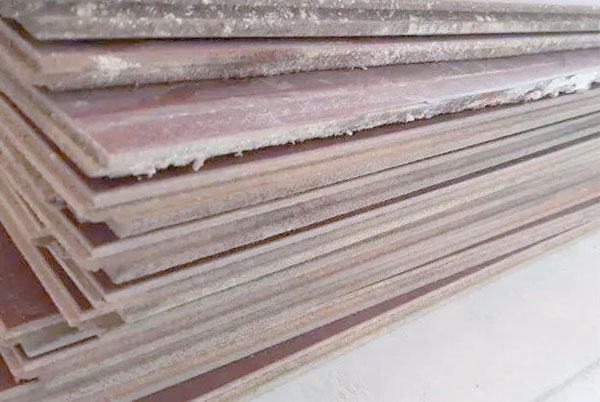
1. Selection Guide: What Kind of Board Survives the Rain?
In the dry season, using standard Moisture Resistant (MR) glue might be fine. But in the rainy season, it is a gamble we do not recommend. Based on our factory audits, here is the objective truth about glue performance:
- 🔄 Upgrade to WBP Glue (Mandatory)
Don’t take chances. Even for indoor furniture, we advise upgrading to Melamine WBP. It resists the high moisture in the air that causes standard urea glue to break down.
- 🏗️ For Construction: Phenolic is Safety
If your project timeline overlaps with the rainy season, Phenolic WBP Film Faced Plywood is the safest insurance. Even if caught in a storm and soaked in a puddle for days, this 72-hour boil-proof glue ensures the layers stay bonded once dried.
- 💧 Watch the Moisture Content (MC)
Wood swells when it absorbs water. When sourcing, ensure your factory dries the core veneer to 8%-12% MC. This range is closest to Thailand’s equilibrium moisture content, minimizing the risk of “ballooning” expansion.
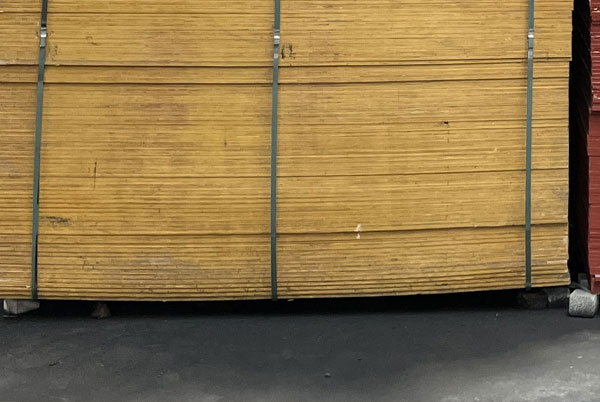
2. Storage Protocol: How to Store Plywood on Site?
Often, the board quality is fine, but the storage is wrong. We have seen too many claims that turned out to be storage errors. Please share this “Rainy Season Storage Checklist” with your warehouse team:
📋 Rainy Season Storage Checklist
Rule #1: Off the Ground (The 15cm Rule)
This is non-negotiable. Ground moisture rises rapidly during rain. You MUST use dunnage (wood blocks) to elevate the plywood packs at least 15cm off the concrete or dirt floor to allow air circulation underneath.
Rule #2: Stack Flat, Never Vertical
Long-term vertical storage causes boards to bow under their own weight, especially when damp. Stack them flat, and place a heavy cover sheet on top to prevent the top layers from curling.
Rule #3: Cover, But Let it Breathe
Covering with a tarp is essential, but do not wrap it airtight. If you seal a damp pack in plastic under the hot sun, you create a “greenhouse effect” that breeds mold in 24 hours. Leave vents for airflow.
3. Construction Tips: Managing Moisture During Work
🛡️ Seal the Edges Immediately
In the rainy season, any fresh cut is an open wound drinking water. We strongly recommend applying Waterproof Paint or edge banding immediately after cutting. If you source through our platform, you can request factories to perform Pre-Sealing.
📏 Leave Expansion Gaps
Wood expands. When installing flooring or wall cladding, leave a 1-2mm expansion gap between boards. This gives the wood room to “breathe” and prevents buckling when the humidity hits 90%.
4. Our Platform’s Packing Standard for Thailand
To combat the high humidity during ocean freight (15 days at sea), The Plywood Hub enforces a stricter packing standard for all orders heading to Thailand during the monsoon:
- 📦 Thicker Plastic Wrap: Every bundle is wrapped in heavy-duty plastic to create a moisture barrier.
- 🛡️ Full Carton/Plywood Protection: The sides and top are fully enclosed with carton sheets or thin plywood, not just open pallets.
- 🔗 Steel/PET Strapping: Tightly strapped to prevent movement and gaps.
This ensures that when the container opens at Laem Chabang Port, the boards inside are as dry and crisp as when they left the production line.
[Conclusion: Managing the Uncontrollable]
We cannot stop the rain, but we can change how we prepare for it.
Whether it is upgrading your glue spec or improving your site storage, The Plywood Hub (China) is here to support you with knowledge.
Reject Middlemen, Connect Direct to Factory.
Don’t wait until you see the mold to regret it. Prepare your supply chain now for the wet season.
🔥 Verified Products
-
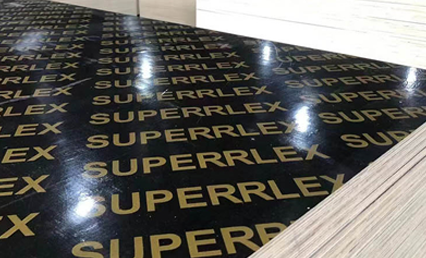 Score: 4.8 ★★★★★
 -
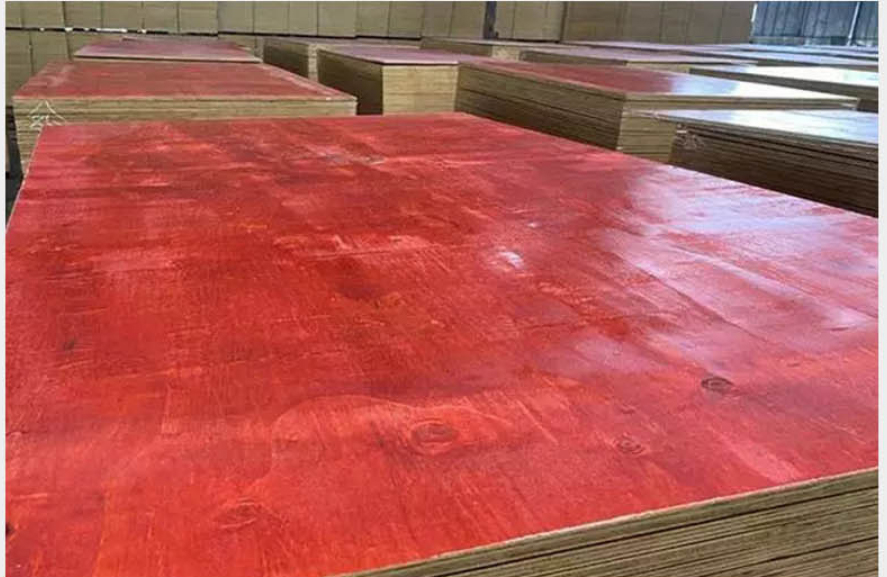 Score: 4.9 ★★★★★
🏭 Recommended Factories
-
 ✅ Verified Partner


